— The Guardian on Hip Hop group Digable Planets, who are celebrating the 30-year anniversary of their seminal album “Blowout Comb.”
Posts about Hip Hop (RSS, JSON)
Friday, 06 December 2024
Tuesday, 26 November 2024
— For Madvillainy’s twenty-year anniversary, the 4K remastered music videos of Madvaillain’s “Accordion” and “Rhinestone Cowboy.”
Monday, 18 November 2024
— The Hieroglyphics spit their legendary lines over instrumentals from the uber-talented OMA. Has my head bop like it’s 1998 again.
Tuesday, 12 November 2024
— Stones Throw releases the Madvillainy demos on vinyl later this month.
In 2002, before Madlib and MF DOOM finished Madvillainy, the first demo sequence of the album leaked online – early vocal cuts from DOOM, recorded then quickly mixed in LA at Madlib’s Bomb Shelter studio. The leak spread around the world, and while the tracks may have been unfinished, it was clear that this was a hip-hop album unlike any other…
Monday, 11 November 2024
The Auditorium, Vol. 1
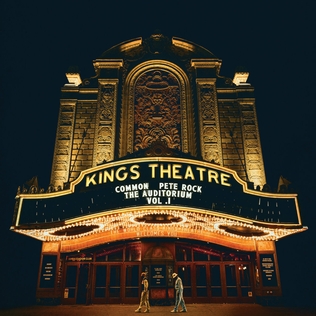
— There is, as far as I know, no Hip-Hop equivalent to dad rock, the music that reminds white men in their forties of their younger days. There should be because The Auditorium Vol I falls squarely into this category.
Common and Pete Rock are legends of the genre. Anything they touch on their own will likely be good. A collaboration has to exceptional. And this album is. 15 tracks reminiscent of the boom bap era, the golden years of hip hop, paired with Common’s smart create an all too familiar atmosphere. Get some cold Mixery, let’s meet at the skatepark and see what happens tonight.
“Vol I” it says in the album title indicating there might be more. I hope there is.
Wednesday, 17 January 2024
— The Internet Archive now hosts more than 350 thousand hiphop mixtapes from DatPiff. Kids, before Spotify started numbing you with algorithmically curated playlists, we used to discover new music through other humans. Rap music had very little airplay on the Radio or music television; sharing mixtapes from friends and popular DJs was the only way to find new stuff. Mixtapes are an essential part of Hip Hop culture and this is an invaluable archive of the genre’s history.
Monday, 18 December 2023
— The Wu Tang Clan are planning a Las-Vegas residency. Just four shows so far; a full Celine-Dion-like residency would break my heart.
Monday, 18 September 2023
— 50 Years Later, Is There Anything Left Of Hip Hop?
Now there’s a universal voice, and the verses sound and feel like a string of buzzphrases. Any song could be by anyone from anywhere. The songs convey a shallow, one-size-fits-all black cool. It’s hip hop muzak. On another podcast JPEGMafia and Danny Brown talked about how impossible the old methods of beat-making were, and how layered the rapping. Hip hop these days can be made more quickly, easily, and cheaply, and can spread farther faster. Anyone, anywhere can do it, without vetting, and find an audience.
This resonates a lot. I don’t understand today’s rap music. Today’s rap is cheap, both musically and lyrically. It’s created to sell, not to create or to educate. Rap has lost its soul.
Thursday, 24 August 2023
— How Hip Hop Conquered the World “Wesley Morris traces the art form from its South Bronx origins to all-encompassing triumph.”
(I swear this is the last post about Hip Hop’s 50th)
Thursday, 17 August 2023
— The 150 greatest Hip Hop music videos according to the Rolling Stone. So many brilliant hip hop videos have been produced over the years: The Pharcyde’s Drop, Beastie Boys’ Sabotage or Tyler, the Creator’s Yonkers. And you end up with Missy Elliot on number 1? The artist dancing in front of a fish-eye lens, big cars, half-naked women dancing in the rain, didn’t every music video look like that at the time?
— The greatest Hip Hop movies, according to The Guardian’s Radheyan Simonpillai. Beat Street is clearly missing from this list. And if you include The Forty-Year-Old Version, you might as well include other movies that explore the social environments from which rap music originates, such as Menace II Society or Boyz n the Hood.
Tuesday, 15 August 2023
Watch Jonwayne make a new beat from next to nothing. Gosh, I hope he’s got a new album coming out soon.
Samples of 50 Years of Hip Hop Music
Tracklib breaks down iconic samples of 50 years of hip hop music. It makes for a good game you can play with over-40-year-old dad friends: Guess the song from the sample. I’d win the 90s era but I suck at everything before and after.
The sample technique that stands out in terms of complexity and intricacy is J Dilla’s Don’t Cry who took 23 samples from just one song and created something entirely new. That’s why there are books about his life and music.
Saturday, 24 June 2023
Nineties hip hop, mostly instrumentals, mixed by Andrew Weatherall. (via)
Saturday, 03 June 2023
— Understand rhythmic patterns—straight, swing, and shift—with these interactive explainers from The Pudding; inspired by the most excellent Dilla Time.
Wednesday, 31 May 2023
— Madlib is playing a rare Australia DJ set in Melbourne next week on 17 June.
Sunday, 21 May 2023
Killer Mike, EI-P – Don’t Let The Devil ft. thankugoodsir
— The Blog Era, a new podcast series, explores the world of hip-hop blogs, which shaped the whole industry and media coverage during the form’s hey day from about 2007 until its beginning demise around 2012.
Thursday, 11 May 2023
— Old School Flyers posts flyers of early-day hip hop parties.
Thursday, 04 May 2023
Dilla Time
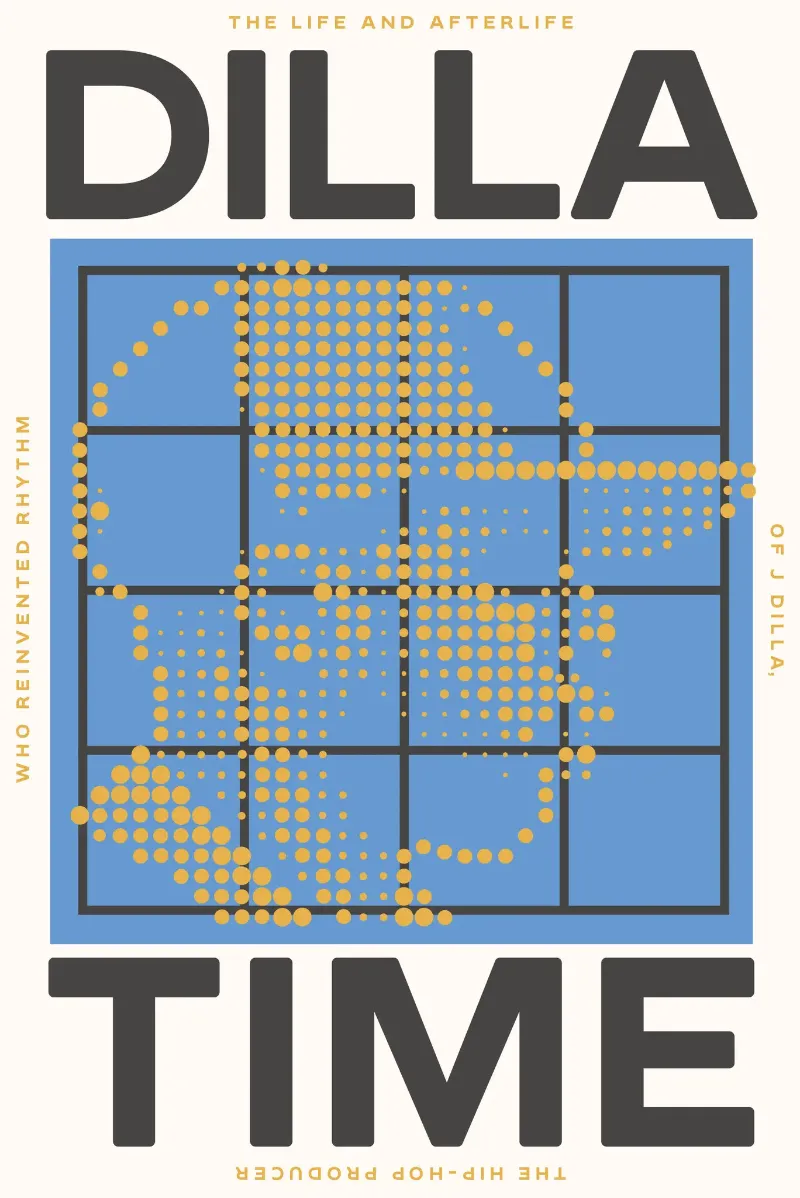
— Non-fiction is at its best when you learn unexpected things. In a book about a hip-hop producer you’d expect to read about colonialism and segregation but not necessarily about city planning or the economic decline of a city.
These inter-connected topics define the environment for James Dewitt Yancey growing up in Detroit to become one of the most prolific rap-music producers. Going by his stage name J Dilla, he is the mind behind classic rap tunes such as De La Soul’s “Stakes Is High”, Common’s “The Light”, or The Pharcyde’s “Running”.
J Dilla invented a new sound that would not only define the sound of Hip Hop going forward but also find its way into RnB, Jazz, and even pop music. Before J Dilla, there were two ways of musical timing: straight time, where the rhythmic pulse is divided equally and swing time where the pulse is “divided unequally, such that certain subdivisions (typically either eighth note or sixteenth note subdivisions) alternate between long and short durations”. J Dilla combined both these styles; he layered, stretched and compressed them to create a new rhythmic feels. The resulting sound is unexpected, a little off, and very different to the style du jour during the boom bap era—but also more intriguing. Most of the Hip Hop music I fancy today uses J Dilla’s rhythmic feel.
Soon big names started emulating Dilla’s production. Questlove wanted to play he drums like Dilla. D’Angelo wanted his album, though recorded with a live band, to sound like it came from J Dilla’s MPC. Pharell Williams and Kanye West cite him as influences. And yet, despite all of the industry recognition, J Dilla never had a commercial successful pop hit. The closest he came was probably Janet Jackson’s “Got ‘Til It’s Gone.” N’Sync, yes, the boyband, enquired about a remix that could have led to a lucrative contracts, but J Dilla turned them down. Instead Timbaland went on to remix N’Sync, to later produce Justin Timberlake and subsequently built a career by pulling faces in music videos.
Based on hundreds of interviews with Dilla’s contemporaries, Dilla Time sheds a light on the musical theory of his sound and how it inspired plenty musicians that came after him. But it also paints the complete picture of a conflicted man: Dilla almost exclusively worked with artists know for their soulful music, spreading messages of love and empowerment. But privately, he loved simple things, money, fancy clothes and going to the strip club. J Dilla had a temper he often took out on the people closest to him. He fathered two children with two women and apparently paid for several abortions.
Dan Charnas wrote a lovingly crafted homage to J Dilla that puts a man at the centre who often worked in the background and rarely got the recognition he deserved when he was still alive.
Dilla Time: The Life and Afterlife of J Dilla, the Hip-Hop Producer Who Reinvented Rhythm (2022). Farrar Straus Giroux. 480 pages.
Saturday, 29 April 2023
— The big Dilla Time playlist is now complete. It is now a whopping ten hours long, containing over 150 songs, spanning all sorts of musical genres and eras.
Friday, 28 April 2023
— Datpiff, a central archive for historical and contemporary hip-hop mixtapes, is pivoting but will hand over its library to the Internet Archive. It’s nice that sometimes good things just don’t disappear from the Internet. (via)
Tuesday, 25 April 2023
De La Soul on stage with a classic track, The Roots as the background band, Black Thought standing in for the late Trugoy and a wonderful tribute to Trugoy—this De La Soul performance is perfect and utterly moving.
Monday, 24 April 2023
Glorious Game
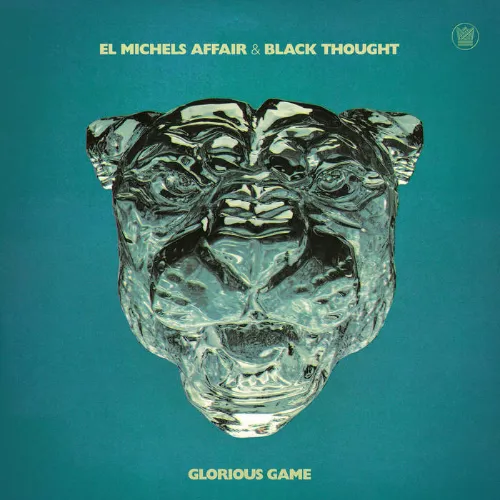
— Although not the norm, rap music recorded with a live band has a long history: Guru’s Jazzmatazz pioneered the genre, The Roots perfected it, and BadBadNotGood’s feature with Ghostface Killah is now a classic. Glorious Game by Black Thought, of Roots fame, and El Michels Affair, of Enter-the-37th-Chamber fame, fits neatly into that line. It brings together an incredibly talented band, many of who have a staggering track record, first and foremost as members of the Menahan Street Band, Daptone Record’s house band, and an MC at the height of his game. Glorious Game is a fantastic album, laid-back and smooth like an Old Fashioned on a Friday night.
Friday, 21 April 2023
El Michels Affair & Black Thought – Glorious Game
Tuesday, 28 March 2023
What a band: Some of the members have played with Marc Ronson, Amy Winehouse, Sharon Jones, or Charles Bradley; they are members of the infamous Menahan Street Band who are also behind many releases at Daptone Records. And Freddie Gibbs is a wildly underrated MC.
Wednesday, 22 March 2023
— Of course, after posting the Dilla Time playlist, I wanted to find pictures of J Dilla’s record collection. What I found was this incredible story of a Detroit record dealer who bought a storage unit full of records, which turned out to be J Dilla’s collection.
Monday, 20 March 2023
Dilla Time – The Discography
— I’m currently reading Dan Charnas’ excellent Dilla Time, a biography of acclaimed Hip Hop producer J Dilla and his music. In the book, Charnas makes extensive references to a vast number of songs—songs that influenced J Dilla’s work, songs that he sampled, and songs that were influenced by J Dilla.
The book’s experience is better when you listen to the tracks while reading. I started keeping a list of all the songs and put them in a playlist in Spotify for my reference and your pleasure. The list contains 83 tracks (so far, I’m still reading so it continues to grow), lasting 5 hours and 30 minutes.
It’s an astonishing body of music spanning different musical eras and genres, and containing many classics but also obscure tracks. Remember, at Dilla’s time, hip hop tracks were produced by sampling snippets from records, actual vinyl records—and now imagine that record collection!
Tuesday, 07 February 2023
A grand tribute at the Grammy awards marking 50 Years of Hip Hop. It perfectly recreates the time when Hip Hop took the final turn off the street into show business: Missy Elliot has her moment. After that, everything is less about words and mostly about choreographed dancing.
Thursday, 02 February 2023
The Chronic
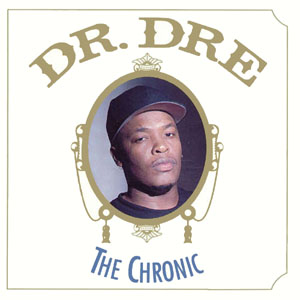
— Tom Breihan, Sterogum (via kottke.org):
Dr. Dre’s 1992 solo debut The Chronic is arguably the most important rap album in history — the record that turned hardcore rap into blockbuster entertainment, showed the uncompromising street music could sell in numbers that nobody had ever predicted, and introduced a vast cast of characters, the young Snoop Doggy Dogg chief among them.
[…]
The Chronic returns to streaming services today, and this is supposedly a celebration for the album’s 30th anniversary, which actually happened back in December.
Small detail: Spotify shows 2023 as the release year for The Chronic. Shows how much they care about music.
Wednesday, 18 January 2023
— A new book by Will Hagle celebrates Madvillainy, the legendary album by MF Doom and Madlib. It will be available from 9 March. The book part of Bloomsbury Publishing’s 33 ⅓, a series of books about classic albums, each with a specific place in the history of popular culture.
Monday, 16 January 2023
— Caleb Mason, a law scholar, dissects the lyrics of verse 2 of Jay-Z’s 99 Problems, explicitly considering the Fourth Amendment. The paper is surprisingly well-written. Even I, not trained in law jargon, can follow the argument. (Via kottke.org)
Thursday, 12 January 2023
I’m loving Vibin’s Boom Bap instrumental mixes. They remind of the olden days, driving to the Baltic Sea in my friend’s VW Golf III. Now they are great background music for work.
Wednesday, 11 January 2023
— When exposed to music by A Tribe Called Quest whilst it ages, cheese develops a “funky” flavour, “remarkably fruity, both in smell and taste, and significantly different from the other samples.” This applies to humans, too; the more Tribe you listen, the funkier you become. (via)
Wednesday, 02 November 2022
Cheat Codes
— Hands down, Cheat Codes is the best rap album in the last five years. Danger Mouse’s production is on point, as always. Black Thought is one of the best MCs out there; I’m glad his gig in Kimmel’s show band leaves enough time to create something worthwhile. The album is delightfully old-fashioned without sounding too much like it was made during the boom bap era. It’s modern hip hop, but it sounds old. I’m old, hence I’m loving Cheat Codes.
Wednesday, 19 October 2022
I have been a fan of both Loyle Carner and Madlib ever since. Now I want an entire album between the two.