Why is that the end goal of blogging? Of writing? Just to make money and grow our followers? To increase our traffic so we can expose our visitors to 300 repetitive ads that take up their entire phone screen? To “convert” our readers into our customers, because them reading and enjoying what we have to say simply isn’t enough? Personally, I want nothing to do with it. I’m sick of everything having to be a hustle now, even something personal like sharing our ramblings with strangers on the internet.
Ironically, it was early bloggers who thought about monetisation long before big tech intruded the space. Around the time when Kottke and Gruber went full time, ad networks for bloggers were created, mommy bloggers reviewed diapers and bearded dudes in gingham shirts wrote about their experience on that new farmer’s market—in return for a couple of dollars.
Sure, it all got worse, a lot worse, once the marketing departments rolled in and talked about publication schedules, personal brands and building an audience. But the foundations for what we’re seeing today, influencers advertising rubbish products, these foundations are rooted in the early blogging community.
Here’s the good news. We’re in a rare moment when a shift just may be possible; the previously intractable and permanent-seeming systems and platforms are showing that they can be changed and moved, and something new could actually grow.
Are we really in a moment where change is possible? Facebook, Instagram, Twitter, Reddit are still around, and we’ve got Threads now. All these platforms are for engagement and advertising dollars.
A lot of the discussions around re-building a better internet remind me of time about 20 years ago, when tech-savvy early adopters thought the Web is a space of endless opportunity to communicate and build communities. Until conservative techno-optimist bros with deep pockets rolled in to screw up everything. Early adopters moving to alternative platforms now, but why do we think it’s going to be different this time. Why do we think we can hold on to our idealistic spaces?
I’m hopeful but not confident. We’re seeing a resurgence of the personal website, of RSS, and even comments on blogs. But it’s a small group that builds this corner of the internet, many of which have been at the forefront of the blogging revolution. But what about the rest?
Personal websites are hard to maintain, writing thoughtful blog posts is time consuming. What made the likes of Twitter, Instagram and Facebook so successful, besides their addictive content curation, is that it’s easy to set up and account and it’s easy to post. Humans are lazy. The quick thought in the shower must go online now; expanding that thought into nuanced argument is too much effort. So is finding websites, maintaining a list of feeds and reading long-form writing? Why go through the effort when the dishes need to be done, and Threads serves new stuff in easily digestible junks.
Maybe the old silos are emptying at the moment. The internet of the next couple of years might be a more pleasant, more social space. But I’m sure some rich Silicon-Valley bro will step up and create the next VC-funded argument machine.
— A virtual walk through the history of the internet. Starting in 1982 with the Map of ARPANET, it includes many familiar highlights. The tour finishes in 2007 with Steve Jobs introducing the iPhone, which is a fitting end because it all went downhill from there. (via)
A new season of Fargo is coming in November, featuring Juno Temple, Jon Hamm and Jennifer Jason Leigh. If the trailer is any indication, we’re in for a twisted and absurd spectacle and I very much look forward to it.
When it comes to maintaining many different networks, Mullenweg thinks, ultimately, POSSE is a user interface problem. And a solvable one. “I’ve been thinking a lot about what’s the right UI for this,” he says. “I think there might be something like, the first step is posting to my blog, and the second step is I get some opportunities to customize it for each network.” Where POSSE has gone wrong so far, he says, is by trying to automate everything. “I’m really into this two- or three-step publishing process to get around this.”
Posting a piece and syndicating it everywhere are two related but separate steps in the publishing process. Fully automated syndication solutions often reduce the second step to posting the headline and a link it to some social-media silo. But pieces generate more interest if the social media post provides context. Outline the premise of your writing in a sentence or summarise your thoughts in 280 characters. Syndication tools should be designed in a way that takes this into account.
— Twitter Clone Pebble Is Shutting Down next week. It is hardly surprising. Too many platforms tried to cash in on Twitter’s decline without offering any added benefits. Pebble is one of them, a replication of Twitter, a clone, not an alternative.
Besides Pebble was lacking traction. Unlike Bluesky, which has the benefit of Jack Dorsey’s familiar name and a grand, very en-vogue focus on decentralisation (although it’s still just one server), a community never formed on Pebble. I signed up with Pebble and my only follower was Gregor Cselle who follows everyone on arrival—like Tom from MySpace. It’s a nice touch; but a desperate move to make a dead network feel lively.
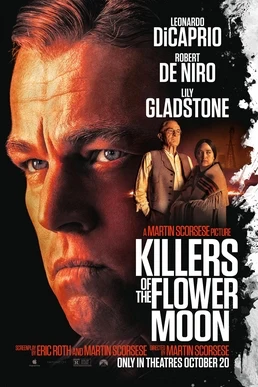
— You know you’re watching a great movie within the first minute of “Killers of the Flower Moon.” The scene is perfect; the camera, the music, it all sets the tone for the film.
You see the oil bubbling up in the prairie early on, like some misplaced witchy cauldron. As the oil begins to gurgle and then to gush, it splatters a half-dozen Osage men who’ve started to dance ecstatically at the discovery, their bodies slicked with petroleum — a harbinger of the blood that, as Scorsese reminds you in this heartbreaking masterpiece, has long engulfed us all.
“Can you find the wolves in this picture?” The premise of the story is established quickly. White people are the wolves in this picture, who moved to Osage County after Oil was discovered. Many are entrenched in the murders of Osage people. Local doctors who first provided lethal substances that slowly killed Osage people and then covered up the murders with fictitious death certificates. The local town sheriff is paid to turn a blind eye to certain dealings. The thick but handsome Ernest Burkhart who loves women and money. But the biggest wolve is William King Hale, the slick cattle ranger portrayed by Robert DeNiro, who is friendly with everyone but manipulative and ruthless.
This is an overwhelming movie. It’s long. Its set design and camera are perfect. The performances by DiCaprio and especially Lily Gladstone are stellar. The unmediated display of cold-blooded and subtle violence leaves you distraught.
“Killers of the Flower Moon” is a magnificent picture. Even at the age of 80, Martin Scorsese outclasses pretty much any director active today. There aren’t many that make movies like him.
Director: Martin Scorsese. Screenplay: Martin Scorsese, Eric Roth. Cast: Robert DeNiro, Leonardo DiCaprio, Lily Gladstone, Jesse Plemons.
— A newsletter for “anyone who wants to design, build, create, and publish on the Web.” Of course content exploring how to own your content on the web is sorely needed. But publishing that content as a newsletter under the domain of a third-party tool is a bizarre choice. Like driving around in a car when you want to convince people of the benefits of riding a bike.
Monday, 23 October 2023
— Cameo’s rise and fall documented. Whenever I question my life decisions, I need to remember that some investors thought a website selling celebrity cameos is worth one billion dollars. All things considered, I make very sensible decisions.
— The London Tube Memory Game is very addictive. I wasted the better part of a weekend but only remembered about 50% of all London transport stations.
Friday, 20 October 2023
— Less traffic is routed from social media to news sites, so news organisations are working on alternative ways to attract readers. This is a development I welcome. Social media sites becoming less relevant for distributing news, less relevant in general—forcing readers to curate their news diet instead of getting drenched by an algorithmically selected menu of divisive content—surely, that’s good step in the right direction.
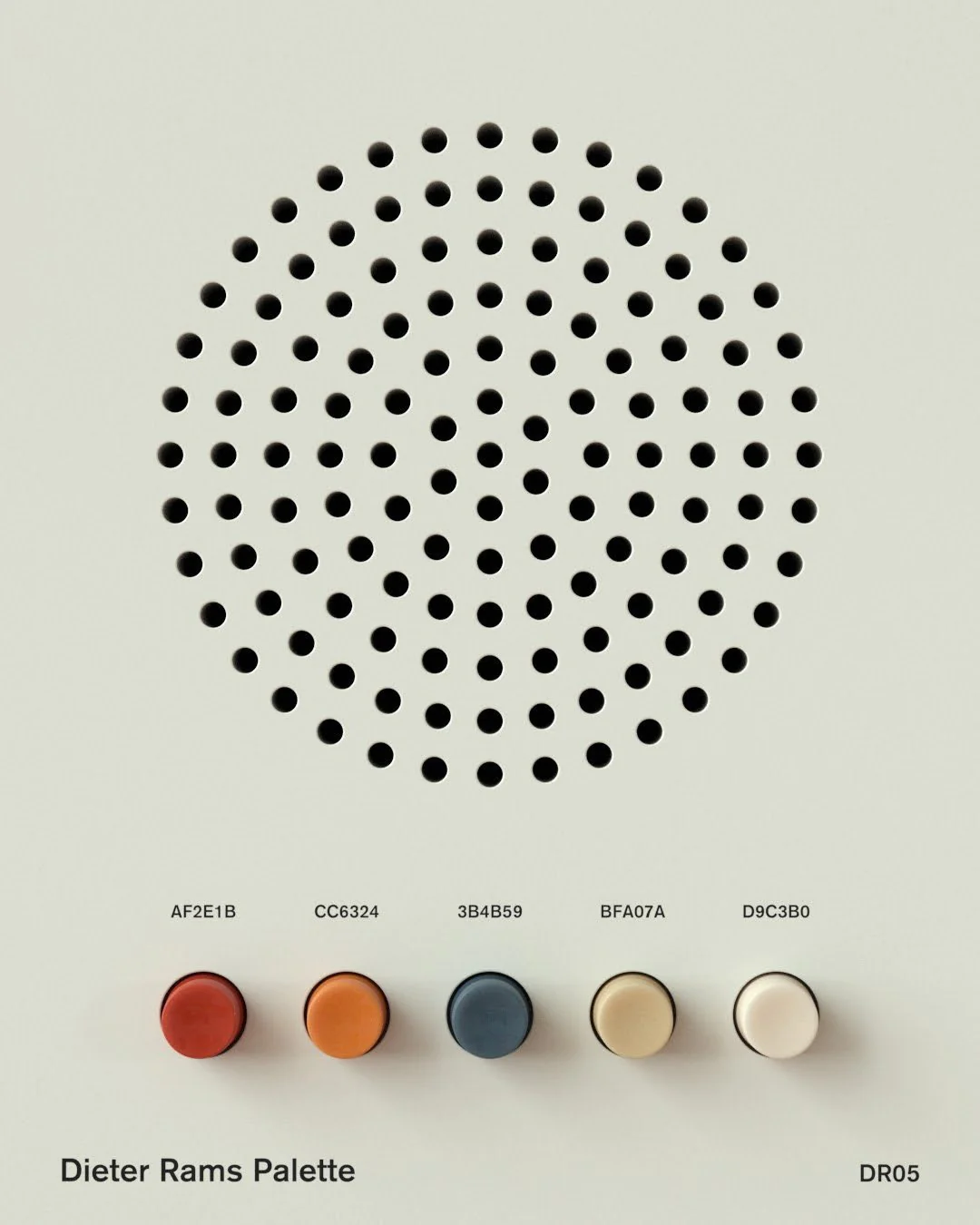
Dieter Rams inspired colour palettes. “Colours taken from Dieter Rams legendary product collection for Braun.” Bookmarking these for the next redesign of the site. (via)
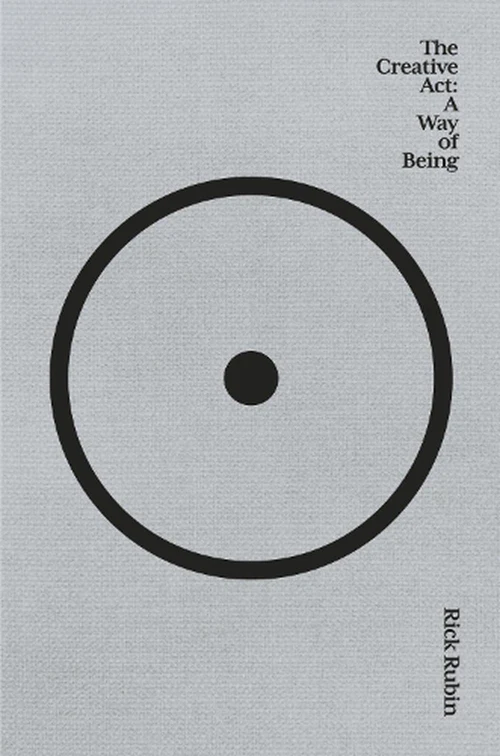
— Rick Rubin has worked with numerous acclaimed artists; the Beastie Boys, Run DMC, LL Cool J, Metallica, Red Hot Chilly Peppers and Johnny Cash. Almost everything he touches turns to commercial gold.
Rick Rubin is prolific in guiding artists to channel their creativity and release their best work. “The Creative Act: A Way of Being”, Rubin’s debut book, captures his approach to creative work.
It’s not a groundbreaking book. You likely heard many of the ideas before; from your meditation guru, the self-help book you got from the airport when you forgot your Kindle, or that productivity blog you’ve been reading instead of being productive.
As with many books of this kind, seeing these ideas written down coherently, ordered and cross-referenced, paints a bigger picture of how to channel creativity in art. You’ll realise that all this can be equally applied to your work as a software engineer and life in general.
Wednesday, 18 October 2023
— Is the Web Eating Itself? Ethan Zuckerman summarises a talk by Heather Ford asking “whether Wikimedia other projects can survive the rise of generative AI.”
Tuesday, 17 October 2023
— Kottke is bringing back comments on selected posts and only for kottke.org members. Maybe the Web is coming full circle and we end up where we were in 2003, a least in a little corner of the Web. That would be nice.
Don’t do a Seinfeld revival, please. Curb Your Enthusiasm already did a whole thing about it, you don’t need to do it for real. If Seinfeld and David or so desperate to revisist that universe, do it as a novel or a comic book—you know, the way something like that is supposed to be done.
Like the Beetle or the Mini, heck I’m going to say Star Wars, Seinfeld is a classic. Any attempt to revive the old magic will certainly fail. (via)
I might have to sign up for Netflix again: A documentary about iconic Columbian goal keeper René Higuita; you know the one with the scorpion kick against England in 1995.
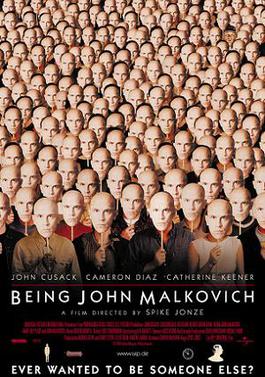
— I re-watched “Being John Malkovich” after a long time; what a brilliant, surprising and witty movie it is.
Charlie Kaufmann, the screenwriter, deservedly received a lot of credit for the brilliance of this flick. I find it equally astonishing that the film was directed by Spike Jonze, who previously was behind the television milestone “Jackass.” (Granted, he also directed the video for Beastie Boys “Sabotage,” arguably the best music video ever made.)
Director: Spike Jonze. Screenplay: Charlie Kaufmann. Cast: John Cusack, Cameron Diaz, Catherine Keener, John Malkovich
— Culture has come to a standstill argues Jason Farago. I, too, noticed that very little of the music or movies coming out these days spark my interest. Movies specifically only seem to be remakes or part of some comic-book universe. And the stuff I do like sounds old and was made by people who have been around forever. I’ve attributed this to being age-appropriately out of touch—maybe it’s not.
— Fascinating portrait of Jack Fisk who designs and builds sets for renown directors; most recently for Martin Scorsese and “Killers of the Flower Moon”. I wouldn’t have guessed they build whole houses just to make a movie.
I have a ridiculously old-fashioned view about blogging: It’s better to post irregularly with content that’s substantive than it is to post on a schedule with content that’s superficial. Posting regularly with substantive content is best
It doesn’t matter how often you post or how substantial your posts are. People write blogs for different reasons. Some explore every detail of a topic and writing things down helps structure their thinking. They naturally end up with long-form writing but post at at a low frequency. Others are collectors. They post post links and add short comments, posting several times a day. In-between these two extremes are the many forms a blog can take. Short posts interspersed with long-form writing, an occasional photo or quote.
There is no one way to blog. Whatever works for the blogger is the right way to blog.
On the 14th of October, Australians will vote in a referendum on whether to change the Constitution to recognise the First Peoples of Australia by establishing a body called the Aboriginal and Torres Strait Islander Voice.
— After linking to a list of East-German football logos, I went to find the crest of the club I played for in the late 1980s as an eight year old. Of course I found it; thank you, internet.
Many East-German football logos have a similar visual language. Vibrant, contrasting colours, hand-lettering, minimalist designs. The predominant visual style of the 1950s and 1960s.
A theory why this style is so common: After the end of World War II and the founding of the GDR, all existing sports clubs were dissolved and re-established. Teams were assigned to a state-owned industrial factory or workshop to bring them under the control of the new socialist regime and to rid them of fascist thinking. And so these new clubs needed new logos. Since the clubs were established around the same time, the new crests were too, in the 1950s and 1960s. Today they represent the zeitgeist of a specific time.
And just like these beautiful crests appeared at the same time, they all disappeared in the early nineties after Germany’s reunification, when the club’s names and associations changed again to rid them of any communist influence.
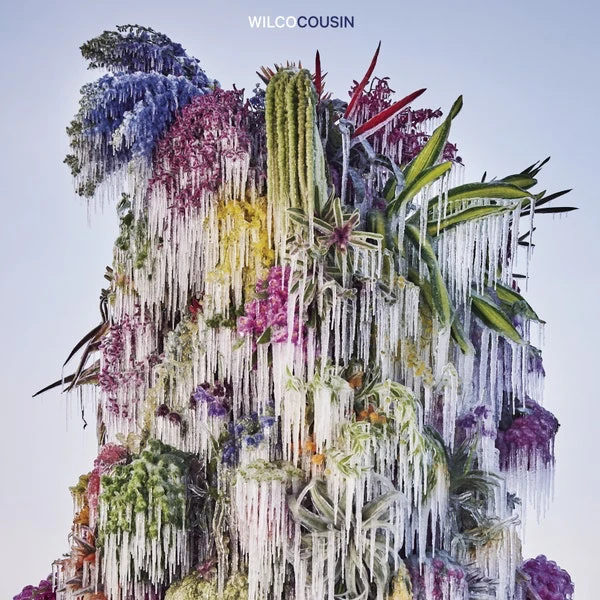
Jeff Tweedy and co’s 13th album bears a close family resemblance to Yankee Hotel Foxtrot, but with Cate Le Bon in the producer’s chair, it has an appealing wash of left-field weirdness and its lyrics express an older man’s anxieties
And he’s right. I’m not the greatest Wilco connoisseur, but to me, both Yankee Hotel Foxtrot and Cousin are great albums, whereas the other Wilco stuff never grew on me.
— Automattic now hosts an archive of Harvard Blogs. “The Harvard Blogs network that the Center launched back in 2003 was an important milestone in internet history. It provided a platform for over 1,500 high-impact bloggers—including Harvard students, faculty, fellows, staff, and alumni—to publish and engage in discussion.”